
Credo Technology Deep Dive
Credo Technology ($CRDO): The Map Is Missing a Country

Introduction
Pull up any photo of an AI server rack and look past the chips everyone obsesses over. See the thick purple cables threading through the racks like veins? One company makes those, and over the past two years, it has quietly put up some of the most absurd numbers in the entire market: revenue up 126%, then up 206%, now guided up 80%+ again, all while keeping 68 cents of every sales dollar. Margins like a monopoly, growth like a startup, zero debt.
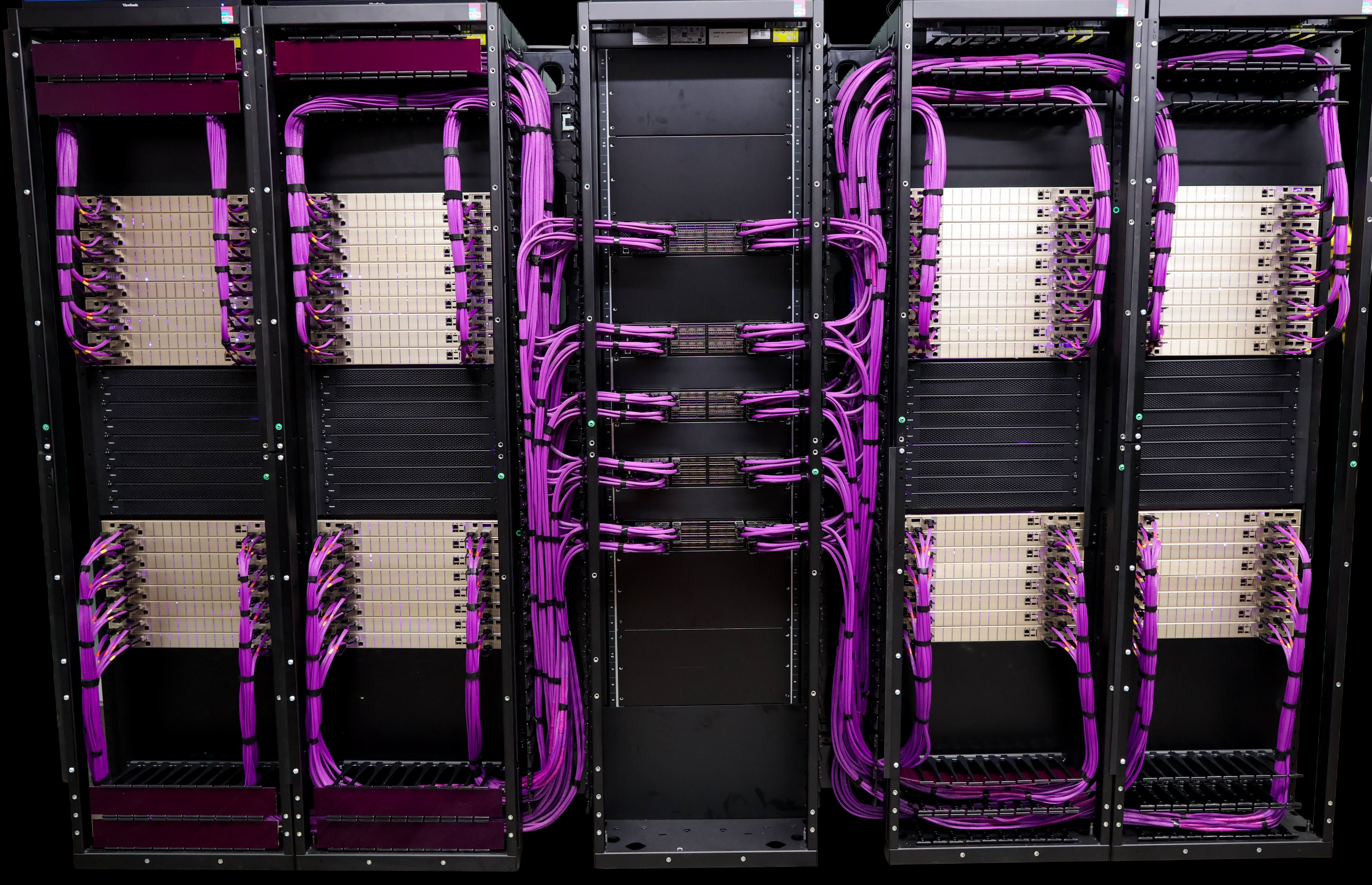
Now the strange part. This company sells to five of the six biggest AI spenders on earth, and the missing logo is the one everyone assumes matters most: Nvidia. Most investors hear that and file the stock under “risky.” We spent a long time inside the filings, the supply chain, and the models Wall Street actually uses to size this industry, and we came away convinced the market has it backward. The half of the AI buildout that gets modeled obsessively is Nvidia’s half. The half that barely gets priced at all is the one where Amazon, Microsoft, Meta, Oracle, and xAI design their own racks. That un-priced half is this company’s home country, and blind spots are where mispricings live.
So here is the full breakdown: what Credo actually sells, the five product engines, the origin story almost nobody knows, the year it nearly died, the financials, what the institutions think and where we think they are asleep, the bear case, and, because a thesis without a price is a slogan, our exact assumptions.
What Credo Actually Does
An AI data center is not one big brain. It is hundreds of thousands of brains that have to think together, as one. A brain is useless if the nerves connecting it to the others are slow or unreliable.
Credo makes the nervous system.
The flagship product is a smart copper cable with Credo’s chips built into both ends, cleaning and boosting the signal so GPUs can talk at full speed. Roughly $500 per cable, about 5 cables per 4 GPUs deployed. Every time you read “Meta ordered another 100,000 GPUs,” add: “...and ~125,000 cables from somebody. Probably Credo.”
Why anyone pays $500 for a cable
A training run is a race in which 100,000 cars must cross the finish line together. One flat tire and everyone waits. If a cheap cable “flaps,” meaning it drops its connection for even a moment, millions of dollars of hardware stalls while the system recovers. Credo’s brand is literally named ZeroFlap: the cable that never drops. When your Ferrari fleet costs billions, you do not shop for the cheapest tires. That is where the 68% gross margin comes from.
The second sale is power. Electricity, not money, is the binding constraint in AI data centers, and Credo’s founding obsession since 2008 has been moving data with dramatically less energy. Every watt saved on cables is a watt you can feed to another GPU. Every hyperscaler CFO understands that in one sentence.
Who buys, and how it locks in
Five of the six biggest AI spenders on earth: Amazon, Microsoft, Meta, Oracle, and xAI, plus the NeoClouds (startup AI clouds like CoreWeave), now account for about 20% of sales. These five each already spend $100M+ per year, and management said in July that no customer is stepping off the gas.
Notice who is missing from the list: Nvidia. Hold that thought later.
Data centers are built like hotel chains: design one blueprint, build it fifty times. Once Credo’s cable is qualified into a customer’s blueprint, every copy of that data center buys Credo cables for years, no rebidding. Nobody rips out a proven part mid-generation when a failure idles millions in hardware. Credo does not win orders. It wins blueprints. And of the five major customers, only one is fully penetrated. The other four still have designs that Credo has not rolled into yet. That is multi-year growth sitting inside relationships already won.
The Product Lines
Think of Credo as a data delivery company, with a vehicle for every distance.
